
Bauxite
Foto (0)
Nessuna foto ancora.
Descrizione
Bauxite is a sedimentary rock that constitutes the world's primary source of aluminium. It is an aggregate of minerals rich in aluminium hydroxides, principally gibbsite, boehmite and diaspore, often accompanied by iron oxides and other components.
Characteristics
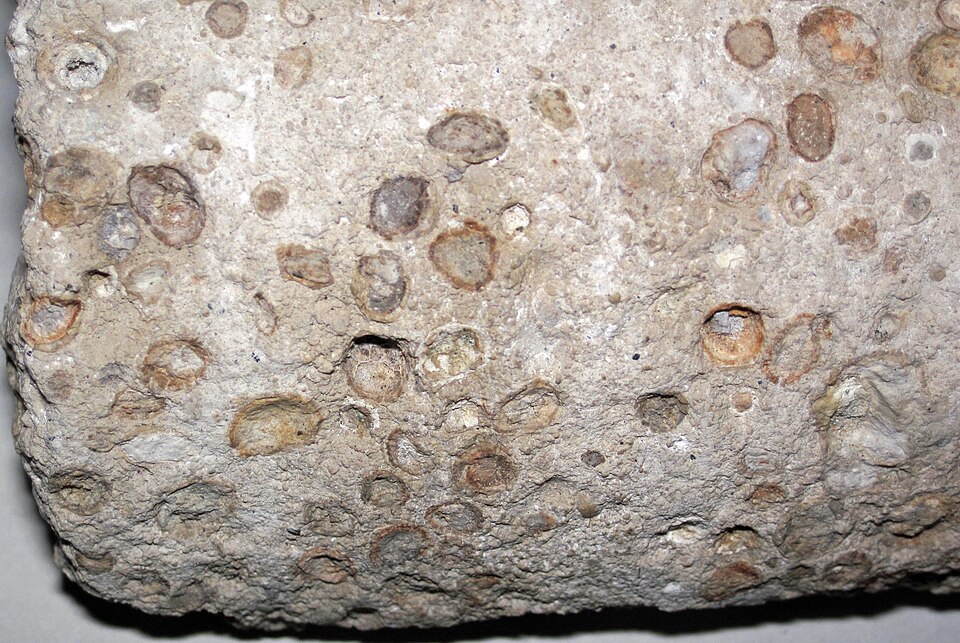
Bauxite has an earthy and porous appearance, with colours ranging from reddish-brown to ochre yellow and pale grey. The reddish colouration is due to the presence of iron oxides. It has a variable hardness between 1 and 3 on the Mohs scale and a density of 2.0–2.5 g/cm³. It displays no defined crystal habit, occurring as compact or friable masses.
Genesis
It forms through chemical weathering of aluminium-rich rocks in hot and humid tropical environments. Intense leaching removes silica, alkalis and other soluble elements, concentrating aluminium hydroxides. This process, known as laterisation, requires specific climatic conditions and very long geological timescales.
Varieties and curiosities
Several types of bauxite exist, classified according to their alumina content and their ratio with silica and iron. The Bayer process, developed in 1888, allows alumina to be extracted from bauxite to produce metallic aluminium. Some tropical countries base a large part of their economy on the extraction of this mineral.
Importance for collectors
Although not particularly sought after by collectors for its aesthetic beauty, bauxite holds didactic and scientific interest. Well-crystallised specimens of gibbsite or diaspore from bauxitic deposits may have collectible value. Its industrial significance makes it interesting for thematic collections focused on economic minerals.
Italian localities
In Italy, modest bauxite deposits are found in Abruzzo, in the Madonie mountains of Sicily and in some areas of the Gargano promontory in Puglia. Historically, small-scale extraction was carried out in Campania and Sardinia, but these operations no longer hold economic relevance due to international competition.