
Stibnite
Foto (1)
Descrizione
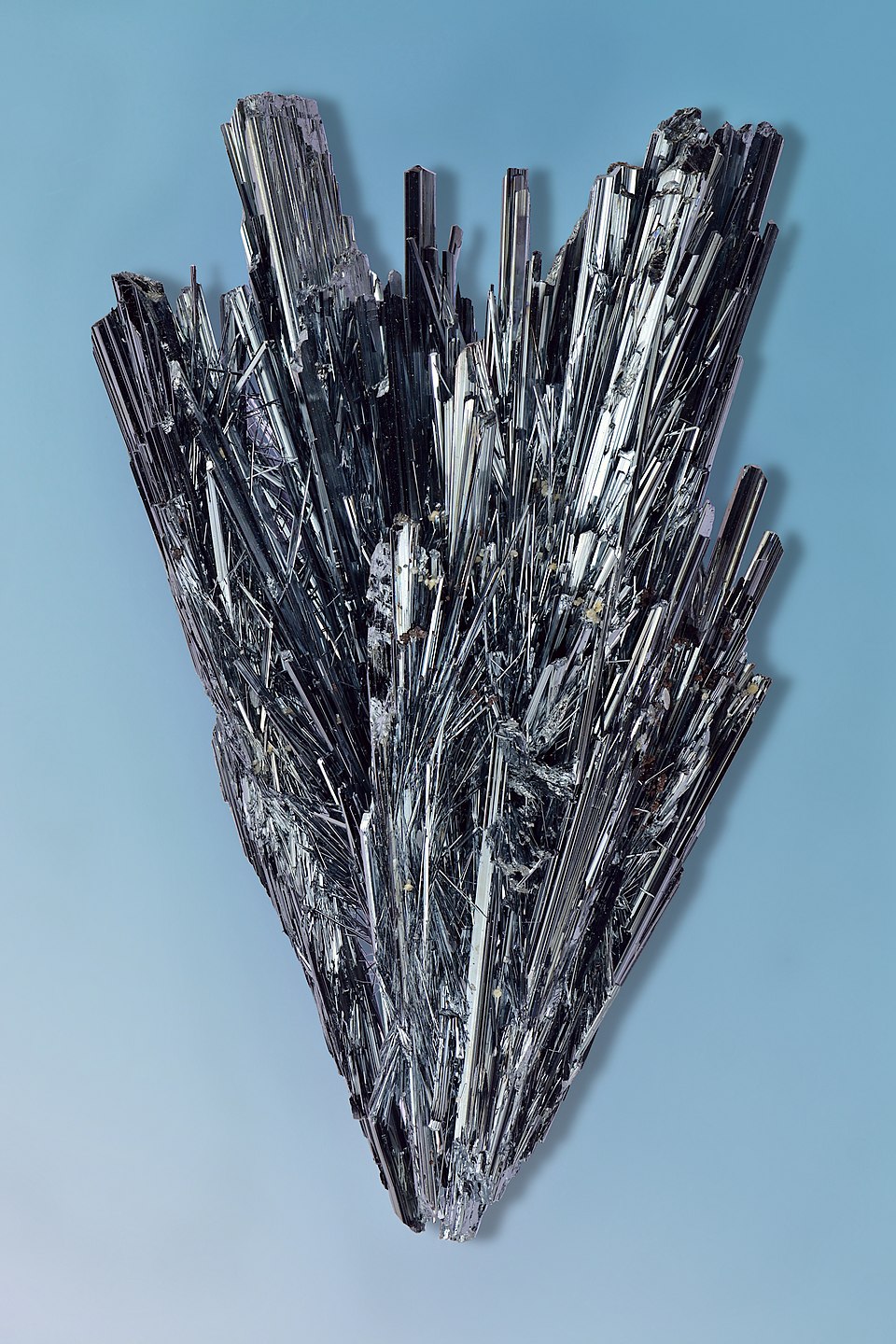
Stibnite is the principal antimony mineral, with the chemical formula Sb2S3. Also known as antimonite, it represents the most important source of this metal, which has been used since antiquity for cosmetic and medicinal purposes.
Characteristics
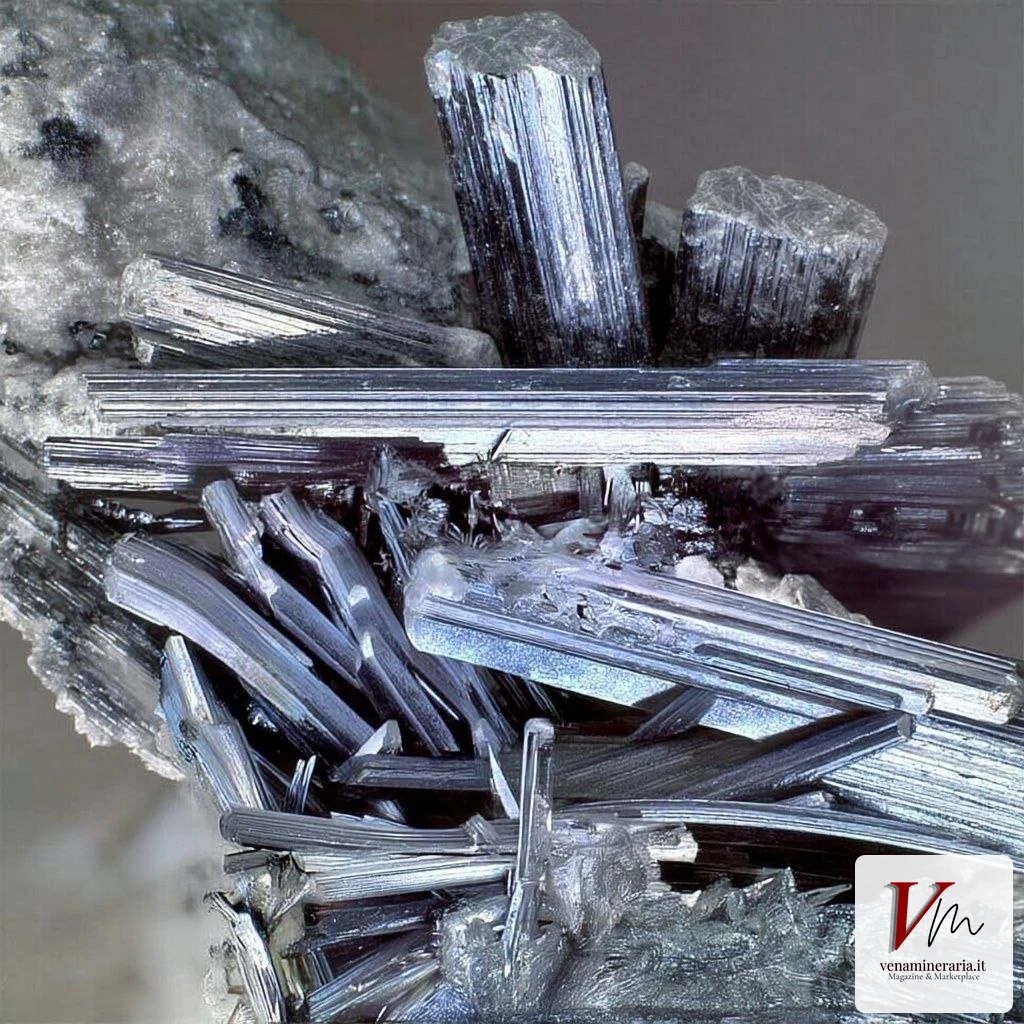
It occurs as elongated prismatic crystals of bright metallic gray color, often with longitudinal striations. Crystals can reach considerable dimensions and display a characteristic acicular habit. Luster is metallic, and the relatively low hardness (2–2.5 on the Mohs scale) makes the mineral brittle.
Genesis
Stibnite forms primarily in low-temperature hydrothermal deposits, often associated with quartz, calcite, and other sulfides. It is found in hydrothermal veins and in alteration zones of volcanic rocks, where antimony-rich solutions have circulated through fractures and cavities.
Varieties and Curiosities
In addition to the common crystalline form, there exists an amorphous powdery variety of cherry-red color. The antimony extracted from stibnite was historically used to produce kohl, an eye cosmetic in ancient Egypt, and is today employed in metal alloys and flame retardants.
Importance for Collectors
Collectors particularly prize specimens with well-formed, large crystals. The brittleness of the mineral makes intact specimens especially valuable, while the bright metallic luster and characteristic crystal habit render it a highly decorative piece.
Italian Localities
In Italy stibnite is found mainly in Tuscany, in the mines of Monte Amiata and the island of Elba, and in Sardinia in the Villasalto area. Some localities have produced museum-quality specimens that are highly regarded by international collectors.